Shipbuilding operations span production, corporate office, R&D, and management systems, requiring IT infrastructure that can support a diverse range of applications and maintain stable, reliable performance over the long term.
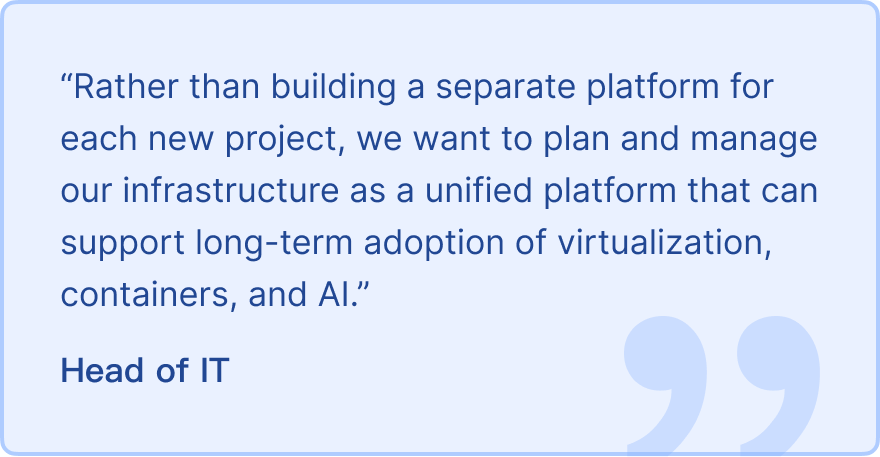
A leading shipbuilding company had traditionally built dedicated IT infrastructure for each project. As virtualization, containers, and AI became increasingly important, the company sought to move beyond this “one platform per project” model and adopt a unified infrastructure platform for capacity planning, centralized management, and workload hosting, while reducing duplicated infrastructure investments. With a lean IT team, the platform also needed to simplify infrastructure deployment, expansion, and day-to-day operations.
Phase 1: Building a Unified Platform for Virtualization and Containers Through VMware Replacement
Some of the company’s workloads were running in a VMware-based virtualized environment with centralized storage. As VMware’s subscription model changed, the company began looking for an alternative to its existing virtualization platform.
Meanwhile, as the company had started exploring containerized deployment for MES-related systems, its initial container environment, built with Docker on bare-metal infrastructure, began to reveal limitations in stability, resource scaling, and day-to-day operations.
With VMs and containers expected to coexist over the long term, and a desire to avoid managing separate platforms, the company decided to address VMware replacement and container platform development through a single infrastructure strategy. This approach would allow different types of business workloads to run on the same infrastructure platform.
SmartX’s VM-Container Converged Infrastructure (VCCI) solution thus became the breaking point. Supporting the converged deployment and unified management of VM and container workloads, the solution aligned with the company’s overall plan and laid the foundation for later containerization of business systems.
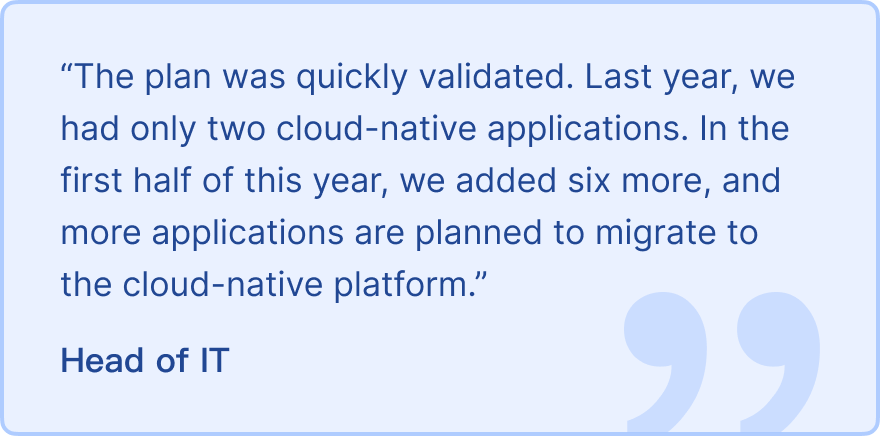
As part of its cross-platform migration testing, the company also evaluated other HCI platforms, some of which encountered compatibility issues when migrating VMware VMs. By contrast, the compatibility and stability demonstrated by the SmartX ECP during migration gave the company greater confidence in moving forward with its unified cloud platform strategy.
Building on this experience, the company ultimately chose SmartX ECP, adopting native virtualization (ELF) and SMTX Kubernetes Service (SKS) to create a shared resource pool for VMs and containers. Traditional applications could continue running in VMs, while MES and other applications suited for containerization could run in the Kubernetes environment provided by SKS.
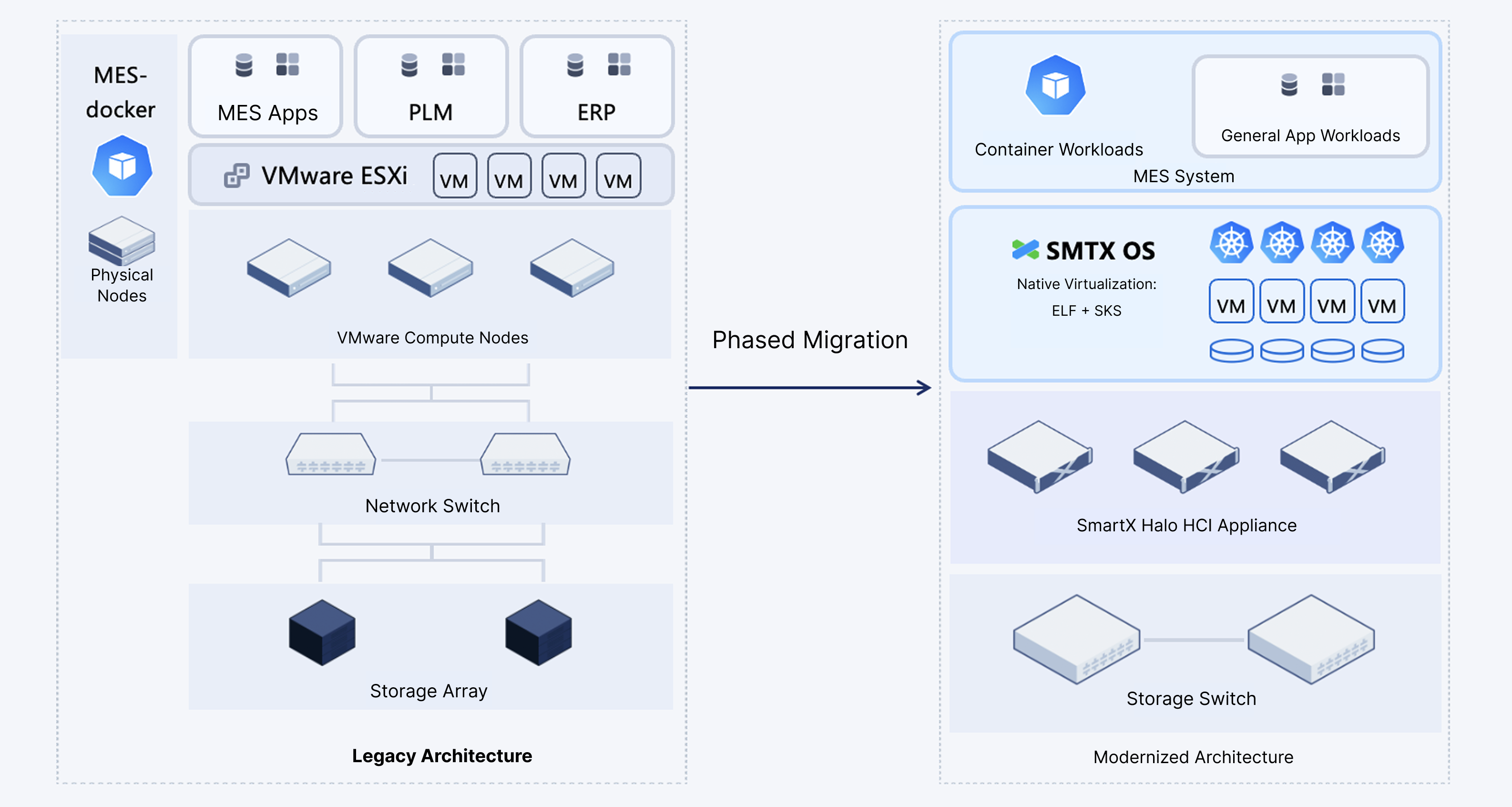
After unifying the platform, the customer saw improvements in cost control, operations efficiency, and service performance:
- Compared with the previous VMware environment, SmartX’s perpetual licensing model reduced recurring software subscription costs, while the architecture upgrade reduced the number of physical servers required.
- With VMs and containers running on the same platform, the IT team can manage both workload types together. SKS also simplifies Kubernetes environment setup and day-to-day operations.
- For container workload hosting, SKS’s elastic scaling capabilities enable resources to scale dynamically based on actual demand, helping overcome the limited elasticity of traditional VM-based environments and further accelerating the containerization of business systems.
- SmartX ECP kept business workloads running reliably during peak periods, while average MES work order processing time fell from 2.5 seconds to 0.8 seconds.
Phase 2: Introducing File Storage and Network Visualization to Enhance the Enterprise Cloud Infrastructure
After consolidating VMs and containers on the same platform, the company continued to enhance its enterprise cloud infrastructure by strengthening data management and security observability. As its applications continued to evolve toward cloud-native architectures, the infrastructure expanded beyond compute to cover data, networking, and security.
The company introduced file storage to support large volumes of unstructured data, including email, and bring such data under cloud platform management. It also introduced network and security capabilities, with a focus on strengthening network isolation between different environments and improving east-west traffic visibility across virtualization and container environments.
- Through virtual private cloud (VPC) networking, the company can isolate production, test, and other environments from one another. This helps prevent address conflicts when IP address ranges overlap between test and production environments. Applications that have not yet been validated for production can first be deployed in a separate network environment, minimizing their potential impact on production systems.
- With traffic visualization, the team once detected abnormally high traffic between two VMs, with more than 10 TB of data transferred in a single day. An investigation with the R&D team traced the issue to a software bug that had triggered an infinite loop. The issue would have been difficult to detect promptly through traditional IT operations methods alone.
With file storage, networking, and security capabilities integrated into the same platform, the company expanded its enterprise cloud infrastructure beyond unified compute hosting to cover data management, network visibility, and security governance. This provided a stronger foundation for building its AI and agent platforms.
Phase 3: Introducing SMTX AI Platform to Unify Models, Gateways, Compute Resources, and Observability
As its enterprise cloud infrastructure matured, the company began exploring AI applications more deeply, using model services to support internal use cases such as shipbuilding standards lookup, translation, and knowledge base applications.
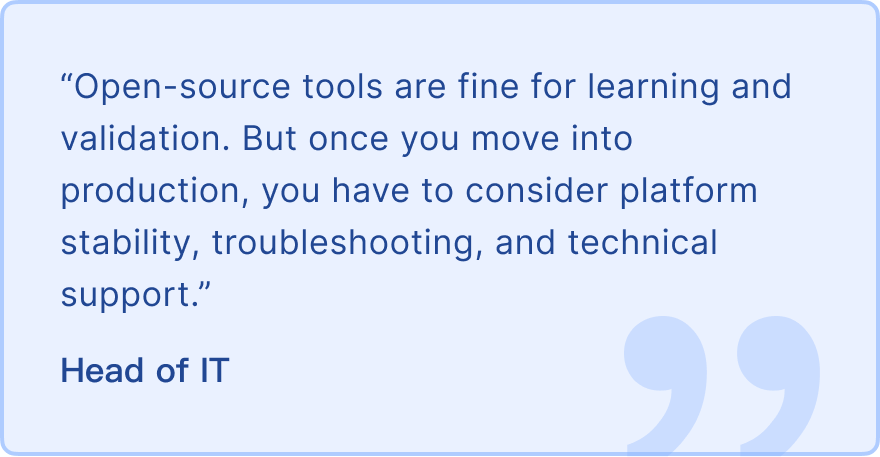
Initially, the company manually deployed models using open-source tools to validate the approach. While these tools helped the team quickly assess technical feasibility, moving to production would place significant pressure on the infrastructure team. Cluster deployment, version updates, troubleshooting, model deployment, and service management would all require considerable ongoing effort. The company therefore preferred to run production workloads on a mature commercial platform, keeping platform complexity manageable and ensuring reliable technical support.
To centrally manage model services and accelerate their deployment, the company evaluated and adopted SMTX AI Platform, building a unified model service infrastructure on top of its existing infrastructure.
The platform provides compute resource management, model management, and a model gateway, enabling the company to centrally manage model deployment, service publication, API routing, API keys, resource monitoring, and access auditing.
With SMTX AI Platform, the company can quickly manage compute resources, deploy models, and publish them as services without making large-scale changes to its existing infrastructure, while making full use of the resources already in place.
Through the visual management interface, the IT team can centrally manage model instances and monitor resource utilization and model performance metrics. The model gateway provides a unified entry point for private models and centralized key management, reducing the risks associated with fragmented invocation configurations and decentralized key management.
Building on this foundation, the company can integrate and deploy new models more quickly in response to business needs. This enables the company to provide reliable model services for applications such as internal information lookup, translation, and knowledge bases, while establishing a unified model service foundation for the subsequent development of its agent platform.
Phase 4: Building an Agent Platform on Top of Model Service Capabilities
With the model service foundation in place, the company further extended its AI capabilities from basic model invocation to practical AI adoption, building an agent platform for internal operations and business process automation.
As part of this approach, the agent platform is not a standalone system separate from the existing architecture. Instead, it extends the company’s existing enterprise cloud infrastructure and model service capabilities. The cloud platform provides the infrastructure foundation for VMs, containers, file storage, security, and observability. SMTX AI Platform provides model service governance, while the agent platform connects internal processes and tools. Together, these platforms form an integrated stack that spans infrastructure hosting, model services, and automated execution.
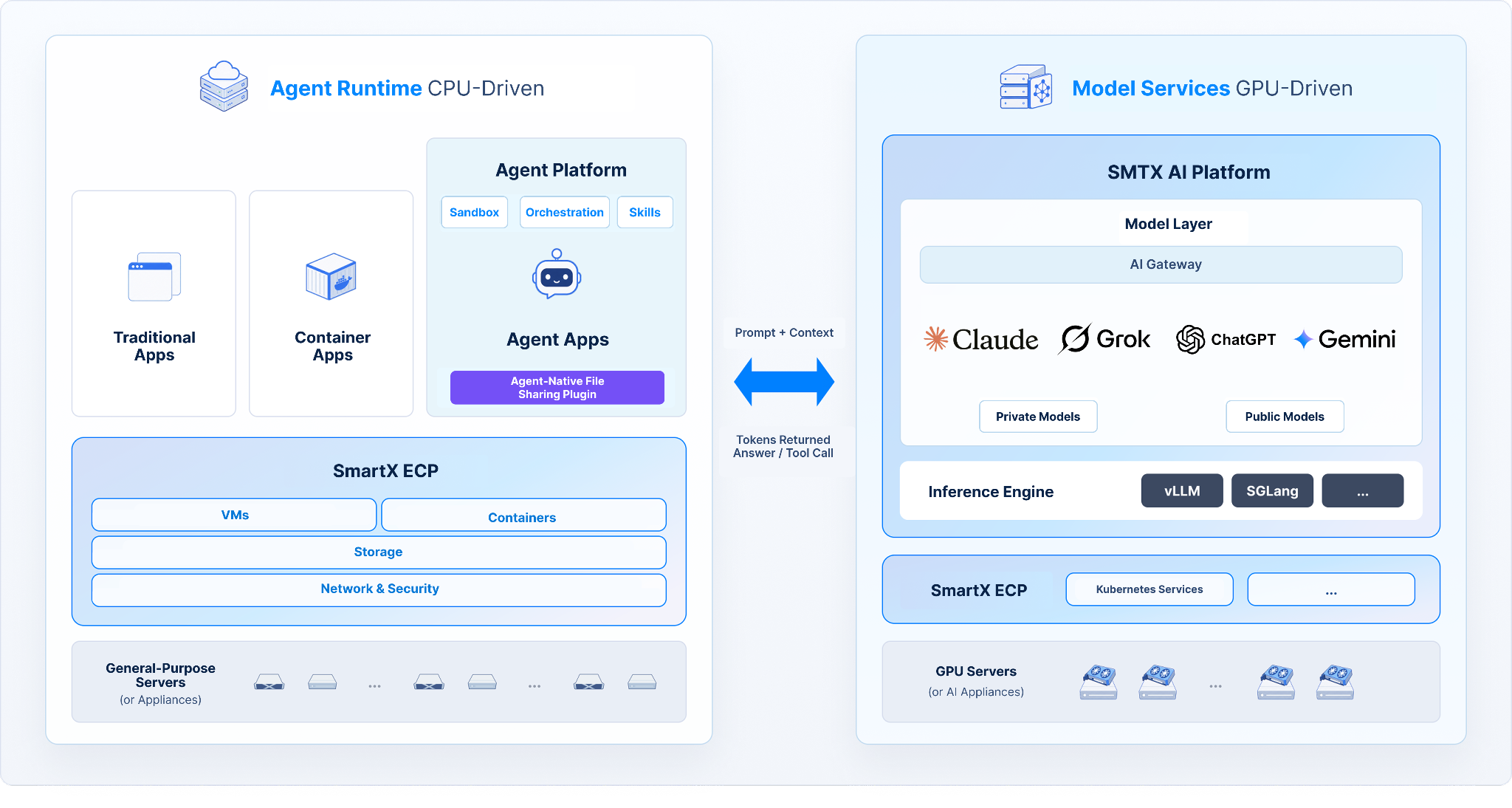
Currently, the agent platform leverages the existing cloud infrastructure and SMTX AI Platform, connecting model services with enterprise business systems and various service interfaces. It codifies selected business and IT operations workflows into reusable capabilities that agents can invoke and orchestrate. The platform currently supports IT use cases such as resource provisioning and IT operations, and is gradually expanding into R&D and design, manufacturing operations, supply chain coordination, and business management. In doing so, it provides a unified foundation for agents to access the company’s internal capabilities.
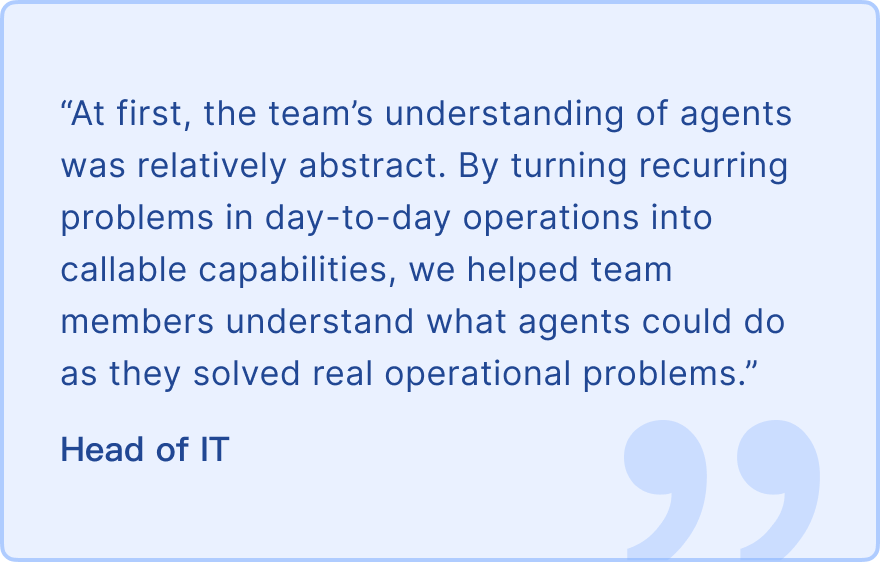
As the initiative progressed, the company also explored the value of the agent platform in solving specific operational challenges. By turning repetitive IT operations tasks into callable capabilities, the platform not only helps the team solve real problems, but also turns “agents” from an abstract concept into a practical way of working.
One Scalable Cloud Platform for Evolving Business Application Architecture
From replacing VMware and building a container platform to adding file storage, security observability, and building an AI agent platform, the company’s infrastructure evolution has been guided by a unified infrastructure strategy.
For the company, the value of this unified platform lies not in completing a one-off replacement project, but in avoiding repeated investment and fragmentation across multiple platforms, allowing the company to incrementally expand and centrally manage VMs, containers, file storage, networking and security, AI, and agent functionality on SmartX ECP as business needs evolve.
References
- SmartX Enterprise Cloud Platform | SmartX ECP
- SMTX Kubernetes Service | Production-Ready Kubernetes
- SMTX AI Platform | Build AI-Ready Infrastructure with Ease
- Everoute | Networking and Security for Virtualization and Kubernetes Workloads
- SMTX File Storage | Enterprise-Grade Distributed File Storage
- SmartX VM-Container Converged Infrastructure (VCCI)
Recommended Readings
- How to Build An Agent-Ready Infrastructure in Your Enterprise?
- SMTX AI Platform Enterprise Edition Officially Launched: Building Simple, Flexible, and Open AI Infrastructure for Enterprises
- Busting the Myths: Can SmartX ECP Natively Support Containers and Perform Well as Bare Metal?
- Introducing SmartX VCCI Solution: Efficient Integration of VM and Container Resources
- SmartX Named a Representative Vendor in Gartner’s Market Guide for Container Management Platforms in China
